Swiftlet: Running an 80B Qwen Model in 4.3 GB of RAM on a Mac
A new open-source project claims to run an 80-billion-parameter Qwen model in just 4.3 GB of RAM on a Mac, and a 35B model on an iPhone. Here's what that means for local inference.
OpenAI has published Codex Security as an open-source repository, surfacing the threat models, security principles, and guidelines that govern how their AI coding agent handles untrusted code and environments.
Thinking Machines has published Inkling as an open-weights model, giving builders direct access to run, fine-tune, and deploy it on their own terms rather than through a locked API.
Iroh's new Mesh LLM project lets you spread large language model inference across multiple devices over a peer-to-peer network — no central server required. Here's what it means for builders running models too big for a single machine.
Kokoro is a compact TTS model that produces natural-sounding speech without a GPU or cloud API, making offline, private voice generation practical on ordinary hardware.
Apertus is positioned as an open foundation model aimed at organizations that need control over where and how their AI runs. Here's why a sovereignty-first approach matters and what you can actually do with it.
Dutch research institute TNO has published GPT-NL, an auditable large language model trained on Dutch-language data — built specifically for public institutions and regulated industries that can't afford opaque foreign APIs.
Google's Gemma 4 QAT variants use quantization-aware training to cut memory needs while preserving quality, making it realistic to run capable open models locally on consumer hardware.
Microsoft released ASSERT (Adaptive Spec-driven Scoring for Evaluation and Regression Testing), an open source tool that turns plain-text descriptions into AI evaluations and regression checks.
Both run LLMs locally for free — but one is built for builders, the other for explorers. Here's how to pick.
Privacy, zero API costs, full control. Here's exactly how to run AI models locally using Ollama, LM Studio, or llama.cpp — with hardware requirements and honest trade-offs.
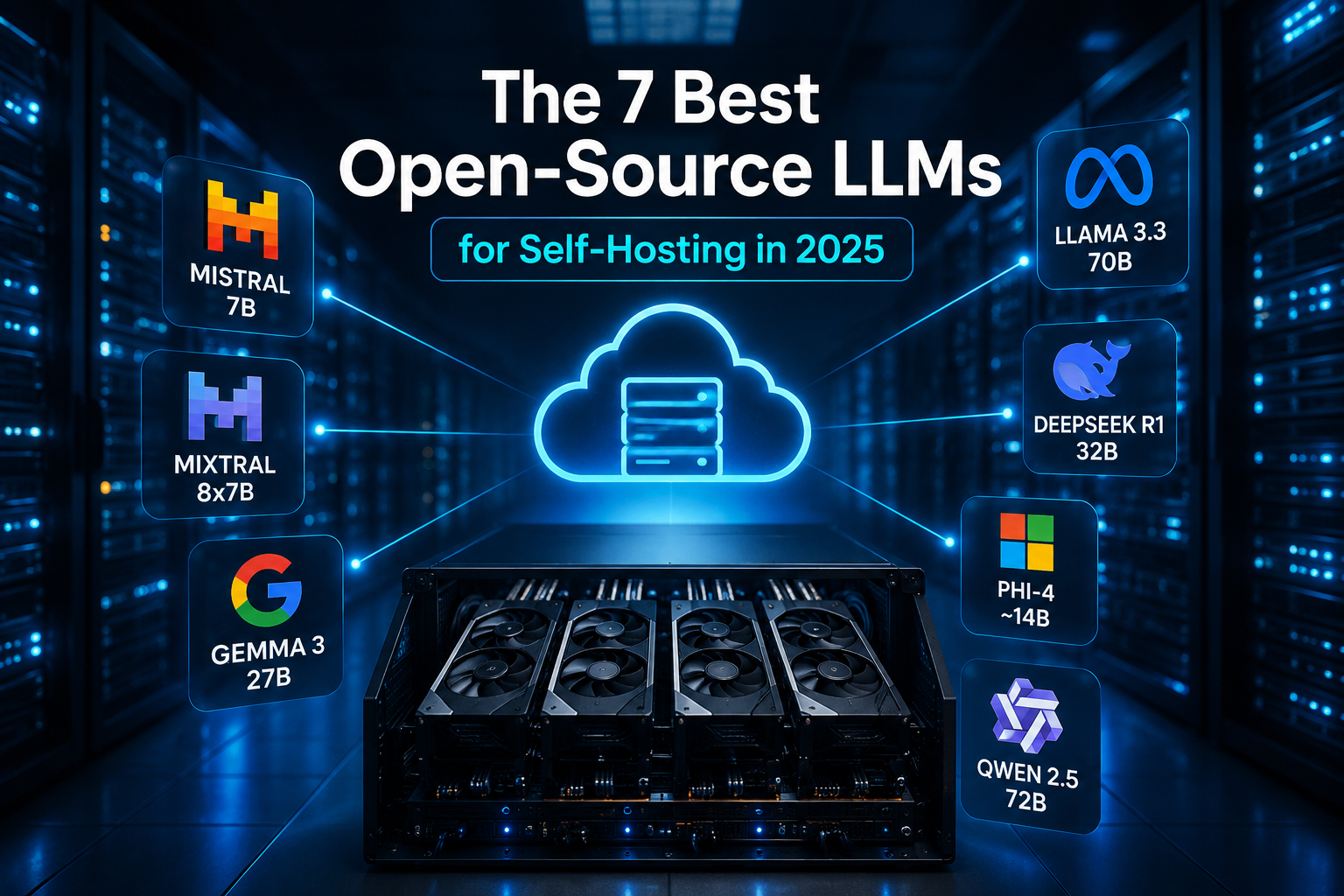
Seven tested open-source LLMs ranked by hardware requirements, license freedom, and real use cases — with a comparison table to pick the right one fast.